

New Africa // Shutterstock
How jewelry appraisal works and what it costs
A jewelry appraisal usually costs about $75-$100, though traditional appraisal fees can range from $50 to $200. This depends on the appraiser, the item’s complexity, and the location.
Appraisers may charge a flat fee per piece or an hourly rate; complex rings, antique jewelry, designer pieces, estate items, or multi-stone designs are often more expensive to evaluate.
So, how much does a jewelry appraisal cost?
- Average traditional appraisals are about $75-$100.
- More complex pieces can cost more.
Below, BriteCo explains how often you need a jewelry appraisal, whether a free appraisal is actually useful, how long the process can take, and what indicates that the appraisal is worth your hard-earned dollars.
Most jewelry appraisals cost around $75-$100 on average, but appraisal fees vary by appraiser and the complexity of the piece.
Note that prices can vary further based on location, appraiser credentials, documentation depth, and whether the appraisal requires research or testing. In-store jewelry appraisals generally cost $65-$200.
Flat Fee vs. Hourly Rate: How Jewelry Appraisers Charge
Jewelry appraisers usually charge either a flat fee per piece or hourly rates based on the time needed to inspect, research, and document an item.
A flat fee for appraisal services is more common for straightforward pieces. You’re more likely to pay an hourly rate for collections, estate jewelry, antique pieces, or pieces that require complex research. Additionally, many appraisers provide a discount if you’re having multiple pieces appraised at the same time.
Before you book, ask your appraiser:
- What is the total estimated fee?
- Do you charge a flat fee or an hourly rate?
- Does the fee include photos?
- Will I receive a signed written report?
- Are additional pieces discounted?
- How long will the appraisal take?
Red Flag: Avoid Percentage-Based Appraisal Fees
Avoid any appraiser who charges a percentage of your jewelry’s value for their services; industry standards dictate that appraisal fees should be based on time, expertise, and report complexity, not the final value assigned to the item. A percentage-based fee can give the appraiser an incentive to overstate the amount of money your piece is worth.
The fee should not rise just because the appraiser says the jewelry is worth more; flat fees and hourly fees are much safer alternatives. A reputable appraiser should also offer a written estimate of their fee before inspection begins.
What Affects Jewelry Appraisal Costs?
The main factors affecting the cost of your appraisal are the complexity of the piece, the appraiser’s credentials and expertise, and the purpose of the appraisal. Your location and the level of documentation required also play a role.
Factors affecting jewelry appraisal cost:
- Number of stones in the piece
- Mounted vs. loose gemstones
- Diamond or gemstone quality grading complexity
- Antique or estate research needed
- Designer or brand verification needed
- Metal testing needed
- Included photos
- Appraiser credentials
- Local market pricing
- Number of items to be appraised
A simple pendant is usually faster to evaluate than an antique diamond ring with multiple stones and incomplete paperwork. As such, expect the pendant to be cheaper to appraise than the antique diamond ring.
How Much Does a Ring Appraisal Cost?
A ring appraisal commonly costs $65-$200, depending on the ring’s value, design, and complexity. Engagement rings can cost more to appraise: For example, in a three-stone engagement ring, the appraiser will need to document the center gemstone, side stones, setting, metal type, condition, and replacement value.
Factors affecting ring appraisal cost include:
- Center stone carat weight and quality
- Side stones or diamonds in a pavé setting
- Designer or custom settings
- Antique or vintage details
- Missing or incomplete documentation
Knowing what to expect with ring appraisals ahead of time can ensure you approach the process with the right mindset.
Jewelry Appraisals for Insurance
A jewelry appraisal for insurance purposes typically documents the item’s replacement value, which is the amount an insurance company uses to help set coverage and support future claims; the appraisal cost is still $75-$100 on average.
Most jewelry insurance policies require an appraisal in the event of damage, loss, theft, or a mysterious disappearance, so it’s vital for most insurance claims. Having an accurate appraisal is truly the only way to guarantee that your item will be replaced exactly as-is.
Insurance appraisals should be written, detailed, dated, and specific enough to clearly identify the item.
Note that the cost of getting the appraisal is separate from your insurance premium, but the appraised value does influence the cost of your insurance.
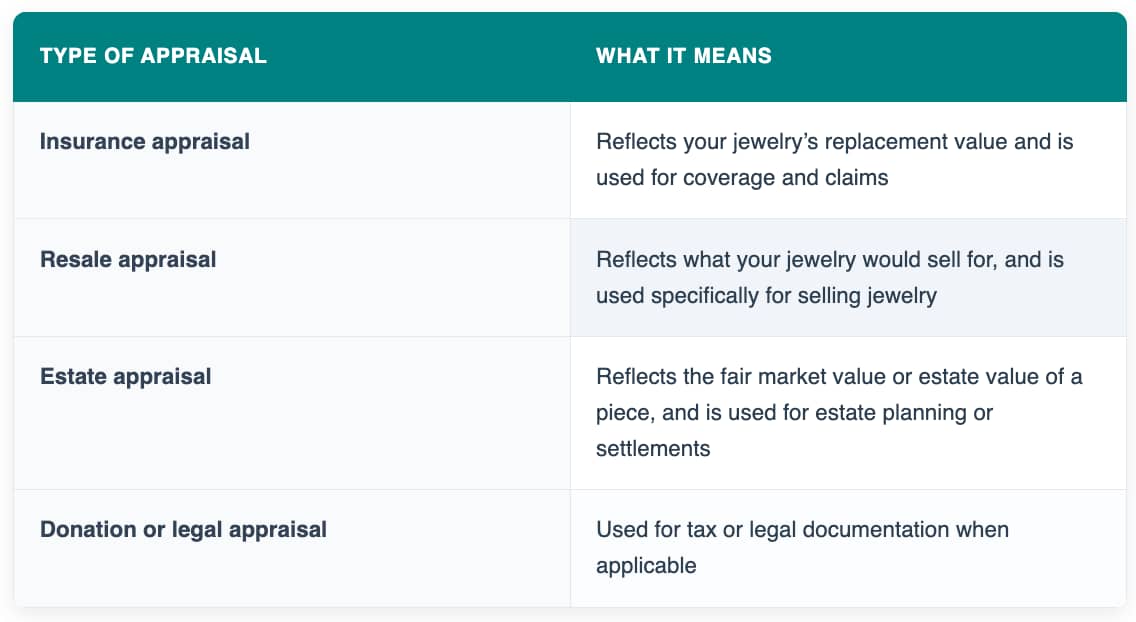
Insurance Appraisal Vs. Resale, Estate, or Fair Market Appraisal
The type of appraisal you get matters; insurance, resale, estate, and fair market appraisals all use different valuation methods.
So what’s the difference?
BriteCo
Can You Get a Free Jewelry Appraisal?
Any reputable jeweler will provide you with an appraisal with your purchase. If you weren’t provided with an appraisal, simply ask your jeweler, and they should provide it for you.
You may be able to get a free jewelry estimate at a jewelry store, but a free estimate is not always the same as a formal written appraisal.
For example, you might be able to get:
- A free appraisal for a new jewelry purchase at the point of sale
- A verbal estimate from jewelers as you shop
- A free promotional appraisal at a dedicated event
- A free appraisal if your insurer or jeweler decides to waive the cost for a buyer
However, if you’re getting an appraisal for insurance purposes, a verbal opinion is not valid, and written documentation is always required. As such, before specifically trying to get a free appraisal, make sure that what you’re getting will actually be suitable for your purposes.
Verbal Appraisal vs. Written Appraisal: Why the Document Matters
A verbal appraisal may give you a rough estimate of your piece’s value, but a written appraisal report is what insurers, estate planners, and serious buyers usually need.
- Verbal estimate: It’s quick, informal, and usually not insurance-ready, and may not even be accurate.
- Written appraisal: This is a detailed report, with photos, an item description, the appraiser’s signature, and the purpose of the valuation.
Insurance appraisals, in particular, require written, detailed documentation; a verbal or incomplete jewelry appraisal will not suffice. If you’re paying for an appraisal, that written report is the main thing you’re paying for.
Diamond Grading Reports vs. Jewelry Appraisals
A certified gemologist diamond grading report from an independent gemological laboratory describes a diamond’s characteristics and quality, while a jewelry appraisal assigns a value to a full piece for a specific purpose.
A grading report may include carat, cut, color, clarity, measurements, and lab details. An appraisal may reflect this information, too, but it also assigns the piece a retail replacement value, resale value, or fair market value.
Use your grading report as supporting documentation when getting insurance or in other situations wherein you might submit documentation showing your jewelry’s value, but don’t assume it can replace a true written appraisal.
What Should Be Included in a Paid Jewelry Appraisal?
A proper jewelry appraisal should include a highly detailed written report; the appraiser shouldn’t just give you a single number.
The appraisal should include:
- The jewelry owner’s name
- Appraiser name and signature
- Appraisal date
- Appraisal purpose
- Metal type and purity
- Item weight and measurements
- Gemstone details
- Diamond 4Cs when relevant
- Condition notes
- Clear photos
- Replacement or fair market value
Whether you’re insuring a new piece or estate planning, detailed documentation will make your appraisal more useful.
How Long Does a Jewelry Appraisal Take?
A jewelry appraisal can sometimes be completed quickly, but timing depends on the provider, the piece’s complexity, and whether the appraiser needs to conduct additional research. Simple pieces are faster to appraise, whereas antique, estate, designer, and multi-stone pieces can take longer. Additionally, written reports require more time than a verbal estimate.
If you need an appraisal for insurance purposes, confirm both the appraiser’s turnaround time and that your insurer will accept their appraisal before booking.
How Often Should You Pay for a New Jewelry Appraisal?
You should have your jewelry appraised every three to five years, or sooner if the piece changes, its value changes, or your insurer requests updated documentation reflecting the appraised value.
Reasons why you might update your jewelry appraisal sooner include:
- Making a major upgrade to the piece
- Making the investment in a new center stone or setting
- A major market value shift
- Missing photos or details in an old appraisal
- Your insurer requests a new valuation
- Newly inheriting a piece of cherished jewelry
While it’s advisable to get an updated appraisal every few years, there are definitely situations in which you should seek a new appraisal right away.
Where to Get a Jewelry Appraisal
You can get jewelry appraised through a qualified local jeweler, through an independent jewelry appraiser, or via an online appraisal service if your item qualifies.
- Local jeweler: If you find a local appraiser, they can be convenient and useful for straightforward pieces.
- Independent appraiser: A specialist is often best for high-value, estate, complex, or antique jewelry pieces.
- Online appraisal: Online jewelry appraisals are ideal for eligible pieces when you have good photos and documentation.
How to Avoid Overpaying for a Jewelry Appraisal
To avoid overpaying for a jewelry appraisal, it’s crucial to ask about the appraiser’s fee structure, the kind of details their report provides, and the expected deliverables before the appraisal begins.
To avoid overpaying:
- Ask whether pricing is a flat fee or hourly
- Avoid value-based percentage fees
- Ask whether photos are included in the report
- Ask whether the report is signed and dated
- Ask whether multiple items qualify for a discount
- Ask whether the appraisal is accepted for insurance
- Compare online vs. in-person options
Remember: The cheapest option is not always best if it does not produce the documentation you need.
Is a Jewelry Appraisal Worth the Cost?
A jewelry appraisal is worth the cost if your piece of jewelry is valuable enough that insurance, resale, estate planning, or replacement accuracy matters.
An appraisal can help you:
- Establish your piece’s replacement value
- Support insurance coverage
- Document your ownership of the piece
- Reduce future insurance claim friction ( if you make a claim to replace a lost piece)
- Resell the piece
- With estate planning
Jewelry Appraisal Cost FAQs
How much does a jewelry appraisal usually cost?
A jewelry appraisal usually costs $75-$100, though the cost varies depending on factors such as the item being appraised and your location.
Is a free jewelry appraisal good enough for insurance?
No, in most cases, a free jewelry appraisal will not be comprehensive enough to be accepted by an insurance provider. However, if you receive a “no charge” appraisal from a jeweler at the time of your jewelry purchase that is detailed and documented, it will probably be sufficient.
Does a diamond grading report replace an appraisal?
No, while there is overlap in the type of information the two types of documentation contain, a diamond grading report cannot replace an appraisal.
How often should I update a jewelry appraisal?
Update your appraisal every few years, expediting the process if your jewelry insurance provider asks for an update, the market changes, or you change the piece.
Jewelry Appraisal Cost: Final Takeaway
Most jewelry appraisals cost around $75-$100 on average, with in-person appraisal prices varying by appraiser, location, and item complexity.
Decide what kind of valuation you need: insurance, resale, estate, or fair market. Choose an online or in-person appraisal based on your jewelry’s complexity and your appraisal needs. Store the final appraisal safely alongside the jewelry’s photos, receipts, and insurance documents.
This story was produced by BriteCo and reviewed and distributed by Stacker.

